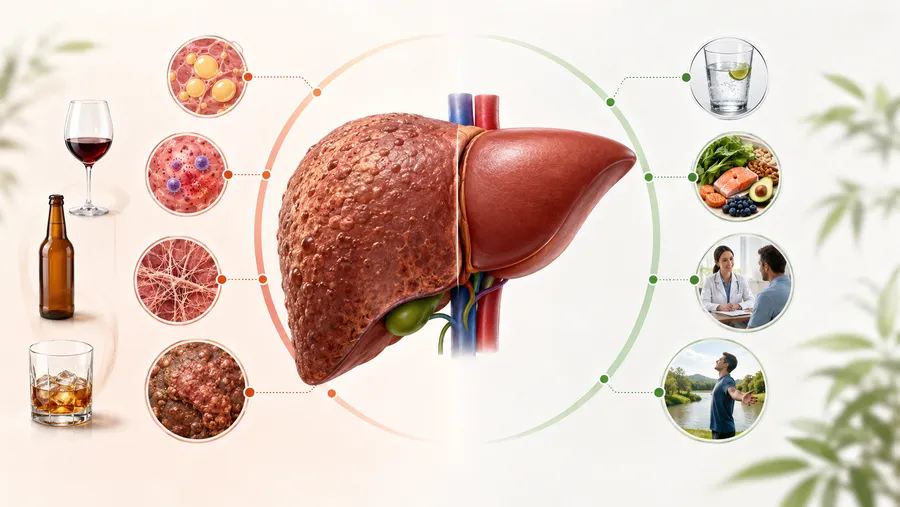
Alcohol-related liver disease remains a major cause of liver damage and failure in the UK. Many people assume that staying within recommended drinking limits protects their liver. In reality, alcohol-related liver risk is more complex than weekly unit numbers alone.
How alcohol affects the liver
The liver processes alcohol and breaks it down into substances that can damage liver cells. With repeated exposure, this can lead to:
- Fat build-up in the liver
- Liver inflammation
- Progressive scarring and cirrhosis
- Liver failure
- Liver cancer
Not everyone who drinks develops liver disease, but once injury begins, progression can be unpredictable.
Why drinking patterns matter
Liver risk depends not only on how much alcohol is consumed, but also on:
- Regular daily drinking rather than occasional intake
- Binge drinking patterns
- Duration of alcohol use over many years
- Co-existing conditions such as obesity or diabetes
Can the liver recover from alcohol damage?
In early stages, the liver has a remarkable ability to heal. Reducing alcohol intake or stopping altogether can result in:
- Improvement or normalisation of liver blood tests
- Reduction in liver fat
- Stabilisation, and sometimes improvement, of liver scarring
Once cirrhosis has developed, damage may not be reversible, but stopping alcohol remains essential to prevent further deterioration, including risk of liver failure.
When should you seek a liver assessment?
A specialist liver review should be considered if:
- You are concerned about your alcohol consumption
- Liver blood tests are abnormal · Fatty liver is seen on imaging
- Alcohol use co-exists with metabolic risk factors
- Symptoms such as fatigue, abdominal swelling, or jaundice occur
Key message
Alcohol-related liver disease is not just about units consumed. Long-term patterns, associated health conditions, and individual susceptibility all play an important role.